
Timeline Retrospective
Reflect on the past month, quarter, or year to surface both wins and areas for improvement.
Free forever · No spam · Unsubscribe anytime
About this template
What is this workshop?
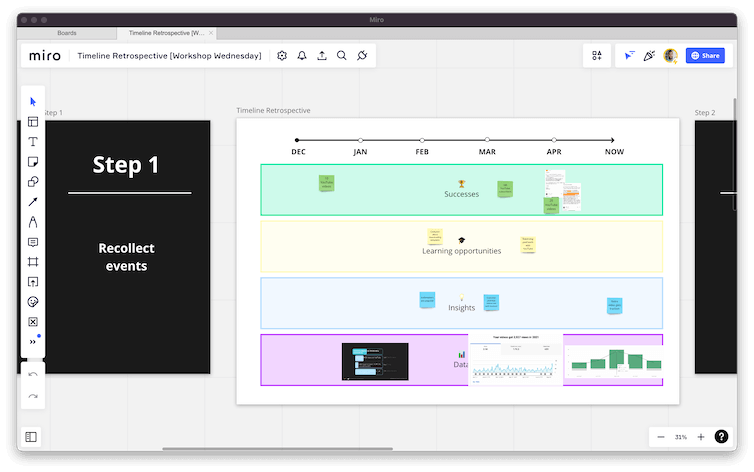
The Timeline Retrospective is the right format when you want a broader view — a sprint retro looks back two weeks, but this one can zoom out to a month, a quarter, or even a full year. By placing events on a shared timeline, the team surfaces patterns, celebrates milestones that were overlooked at the time, and identifies systemic issues that only become visible at scale.
What's included
- Shared timeline canvas
- Color-coded sticky note system
- Pattern analysis section
- Next-cycle commitment board
This is for you if…
- Teams doing a quarterly or annual review
- Managers who want to surface patterns across a longer time period
- Any team that needs to celebrate milestones they rushed past
Download
How to access this template
- 1
Enter your email above — we'll send you the template link right away.
- 2
If you don't have a Miro account, create one for free at miro.com — it takes 30 seconds.
- 3
Open the board link from your email, click the board title in the top-left corner.
- 4
Click 'Duplicate board' to add a copy to your own account.
A free Miro account lets you have 3 active boards. If you're at the limit, archive old boards or combine templates onto one board.
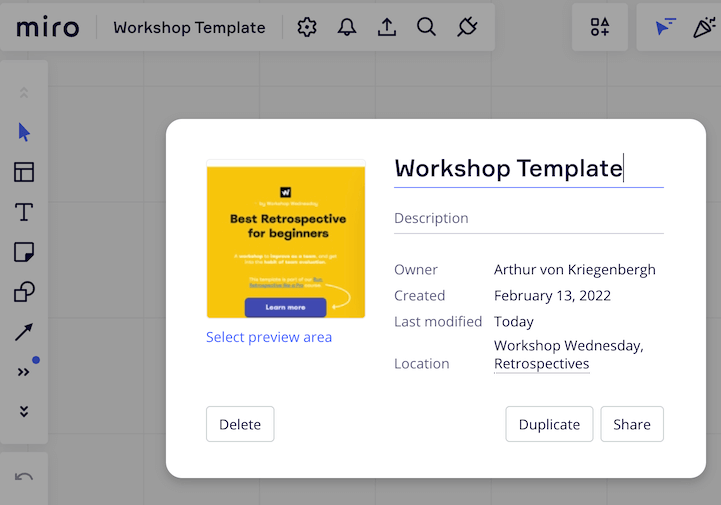
Click the board title → Duplicate board
Getting started
How to run this workshop
Duplicate the Miro board and set the time period for your timeline (month, quarter, or year).
Before the session, ask each team member to jot down 3–5 memorable events from that period.
Place all events on the timeline together, using different colors for wins, challenges, and decisions.
Walk through the timeline chronologically — let stories emerge naturally.
Identify the two or three patterns worth addressing in the next cycle, and assign owners.
Tips for first-time facilitators
- 1
Ask people to prepare 3–5 events before the session. Blank-canvas entry on the day produces superficial results.
- 2
Start with wins — it creates psychological safety for the harder patterns.
- 3
Zoom out to patterns after placing events, not during. Don't analyze and populate simultaneously.
Questions
Frequently asked questions
More like this
More Retrospectives templates
 Popular
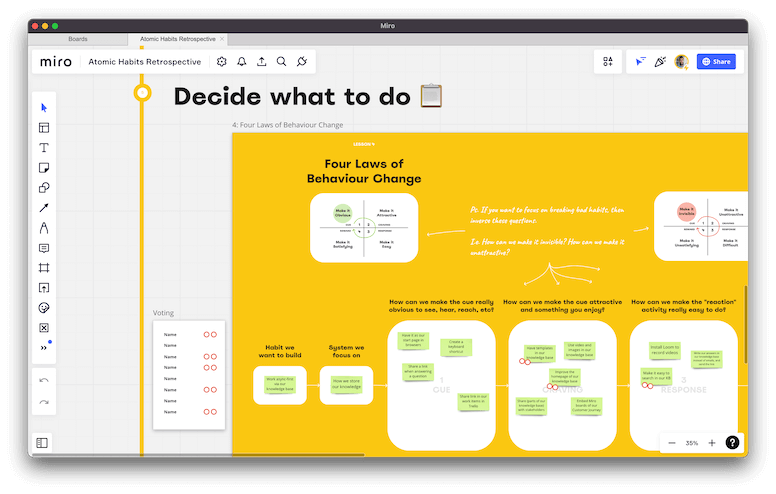
Atomic Habits Retrospective
Apply James Clear's Atomic Habits principles to build better team habits and break bad ones.
View template → Popular
Best Retrospective for Beginners
A simple, proven retrospective format that helps any team start improving immediately.
View template →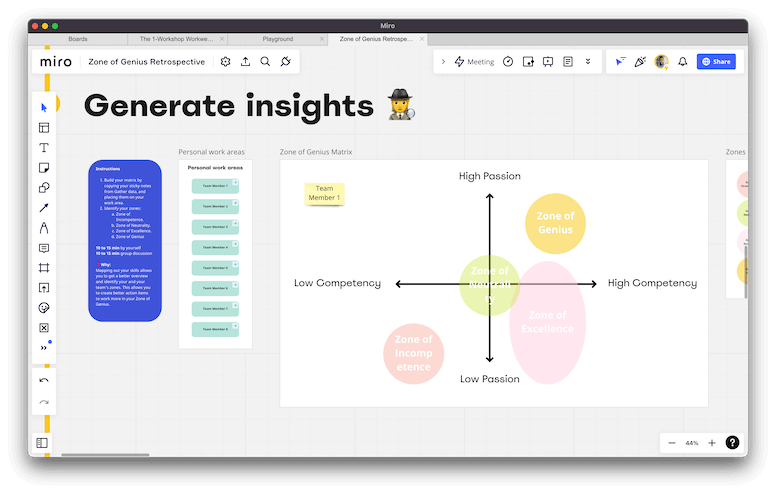 Popular
Zone of Genius Retrospective
Help your team discover their strengths and do more of the work they love.
View template →Want more templates like this?
We publish new workshop templates every week. Subscribe and get each one sent to your inbox.
Next step · AI Sprint
Ready to automate what this template helps you do?
Once your team has the process down, the next step is automation. In five days we build a working AI tool your team uses from day six — no experiments, no consultants.